
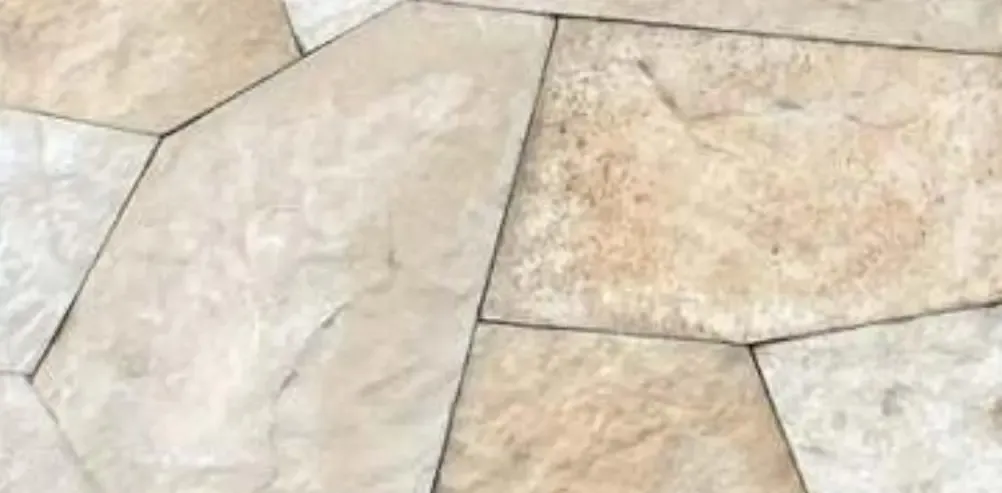
Chapa
Irregular flagstone pattern supplied as a repeating 7-piece set.
- Face sizes
-
- 24 13⁄16" × 33 1⁄16" (7-piece modular sheet)
Stone Appearance
Irregular flagstone supplied as a repeating 7-piece sheet — random looks, predictable installation.
Random flagstone is the look everyone wants and nobody wants to install. Miami Stone Veneer Specialists stocks Chapa because it solves that — seven irregular shapes that interlock into a repeating panel, so the wall looks hand-laid and the installer isn't improvising.
Genuinely random flagstone means somebody standing at the wall for hours fitting pieces together. It's slow, it's expensive, and the quality depends entirely on how good that person's eye is. Two masons will give you two completely different walls from the same pallet.
Chapa fixes the layout at the factory. The seven pieces always fit. Coverage is predictable, so take-offs are accurate and waste is low. The wall looks the same whoever sets it.
The honest downside: it repeats. Rotating alternate sets disguises it well, and mixing Chapa with Chapa II on a big elevation disguises it completely. On anything over about 600 square feet, do one or the other.
Deli Brick is here because South Florida has an odd relationship with brick. People like it; it doesn't like the salt air. A concrete thin-brick gives you the look with none of the long-term mortar problems, and at 15¾ by 3 15/16 inches it lays fast.
Roman I is the four-size opus pattern — formal, symmetrical, and a good middle ground when random feels too casual and a square grid feels too modern.
$10 to $17 per square foot. Chapa's real advantage shows up in the install quote rather than ours — predictable coverage means a mason can price it tightly instead of padding for layout time.
Two Chapa colourways plus the brick and opus formats that share their laying logic.
Irregular flagstone pattern supplied as a repeating 7-piece set.
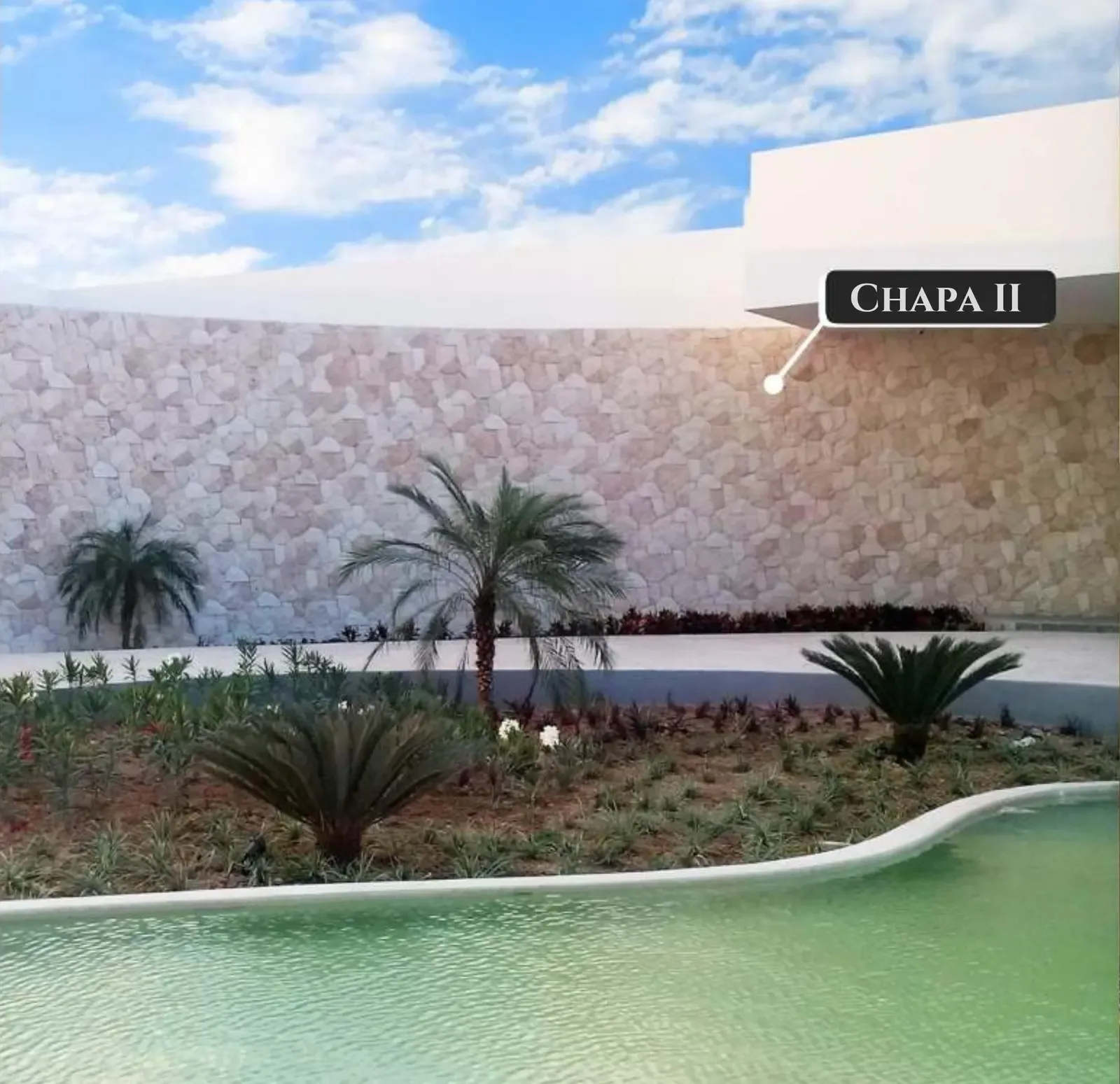
Second Chapa colourway with tighter joints.
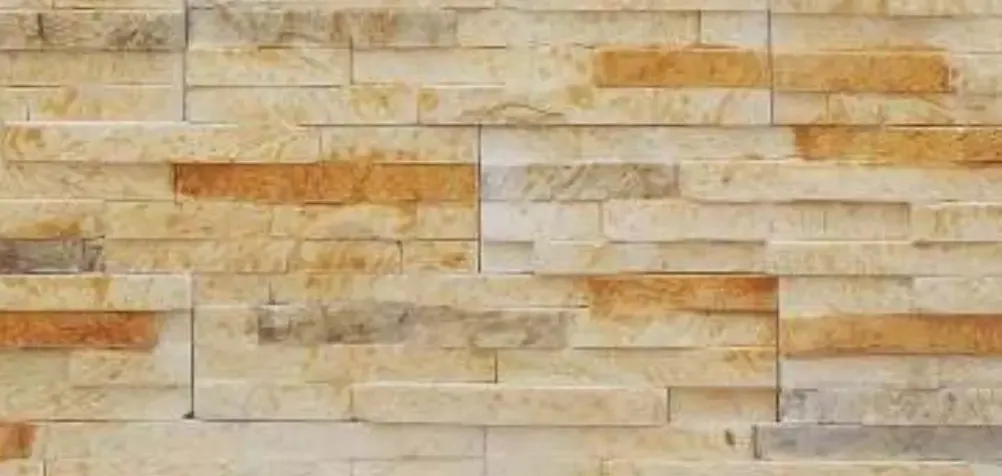
Thin brick format with a kiln-fired look.
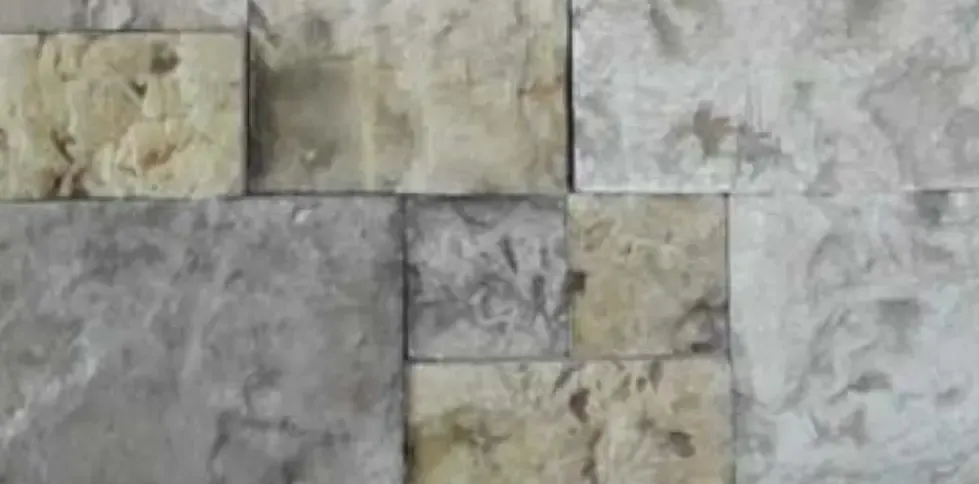
Four-size Roman opus pattern.
| Compressive strength | 200–250 kg/cm² |
|---|---|
| Body | Grey and white cement, standard and premium grades |
| Colour | Stock colourways plus custom colour matching |
| Finish | Through-coloured, sealed on request |
| Suitable substrates | CMU, poured concrete, brick, stucco, and framed walls over lath |
| Fire | Non-combustible concrete body |
| Exposure | Interior and exterior, above and below grade |
| Coastal use | Rated for salt-air exposure with a penetrating sealer |
| Chapa sheet size | 24 13/16" × 33 1/16", seven interlocking pieces |
| Laying | Modular repeat — rotate alternate sets to break the pattern |
Full spec sheets and dimensioned drawings are available for submittals — ask and they'll be emailed the same day.
The applications this range is specified for most often in South Florida.
The biggest surface on the job and the one that has to survive Miami weather. Here's what we stock for exterior elevations and how it's specified.
View details →Restaurant walls take a beating and get photographed constantly. These are the finishes that survive both.
View details →The entry is the smallest area with the biggest return. A few hundred square feet of the right stone changes the whole elevation.
View details →When the wall is the point. Deep-relief panels, lattice screens, and large-format stone specified for maximum effect.
View details →The pillar of our range. Concrete stone that carries the colour, depth, and texture of quarried stone at a fraction of the weight and cost. Eight collections, 38 face formats, stocked locally.
View details →Deep relief and heavy texture for elevations that need weight. Six-size ashlar mixes through to 24-inch quarried panels.
View details →Made for waterfront elevations. Pale, shell-flecked faces plus a cool riven slate, all rated for direct salt-air exposure with a penetrating sealer.
View details →Chapa ships as a repeating set of seven interlocking shapes that together make a 24 13/16 by 33 1/16-inch panel. Your installer lays the set, then repeats it. You get the random flagstone look without anyone standing on site solving a jigsaw puzzle.
Less than you'd think, because the seven shapes are irregular and can be rotated. Rotating alternate sets breaks the pattern well enough that most people never spot it. On a very large wall, alternate Chapa and Chapa II to be safe.
No — it's a 15¾ by 3 15/16-inch concrete thin-brick with a kiln-fired look. Real brick is rare in South Florida because of what salt air does to the mortar over decades. This gives you the look without that problem.
It's a four-size opus pattern — the Roman paving layout, on a wall. It suits entryways and courtyards where you want something more formal than random flagstone but less rigid than a square grid.
Send your square footage and we'll come back with a number, a stock position, and a delivery date for Miami.