
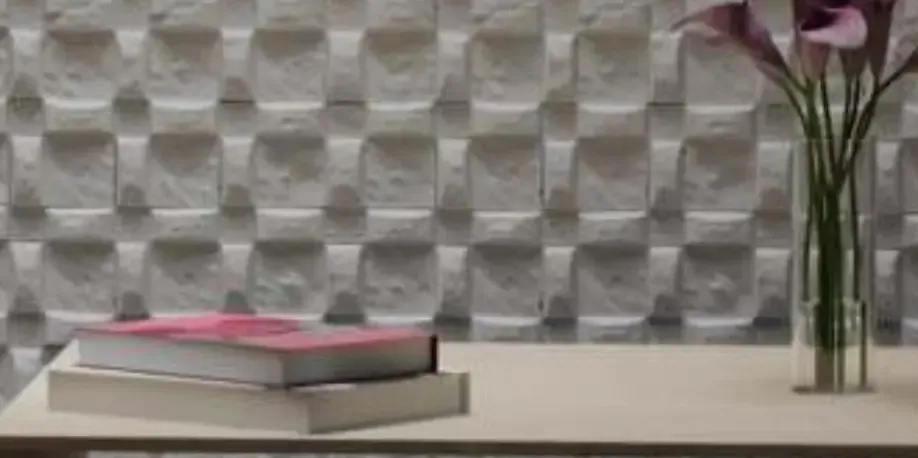
Kalathi
Woven basket relief.
- Face sizes
-
- 9 1⁄16" × 11 13⁄16"
- Thickness
- 13⁄16"
Architectural Concrete
Fifteen relief patterns that tile seamlessly — from a barely-there pebble face to a two-inch deep architectural shadow.
These panels don't have a colour problem to solve. They have a light problem. Miami Stone Veneer Specialists stocks fifteen relief patterns whose entire job is to take flat, boring illumination and turn it into shadow.
Pattern is what people choose on. Thickness is what determines whether it works. A 3/8-inch Lapillus panel gives you texture — something the eye registers as surface interest. A 2⅜-inch Quadrata gives you architecture: hard shadows that move through the day and completely change the wall between morning and evening.
Deep panels need distance and directional light. Put Quadrata in a narrow hallway under flat downlights and you've spent a lot of money on something nobody can read. Put it on a double-height lobby wall with a grazing light at the base and it's the most memorable thing in the building.
The single biggest mistake is lighting a relief panel straight on. Front lighting kills shadow, which kills the entire reason you bought it.
Graze it instead — a linear fitting close to the wall, top or bottom, throwing light across the surface rather than at it. It costs very little at first fix and it's the difference between a feature wall and a slightly odd beige wall. Tell your electrician before the ceiling closes up.
$14 to $26 per square foot, driven mostly by depth — deeper moulds use more material and take longer to cure. Ocean and Quadrata sit at the top; Lapillus at the bottom.
Ordered roughly by depth. Thickness is the number that matters most — it decides how the panel reads and how much room it takes.
Woven basket relief.
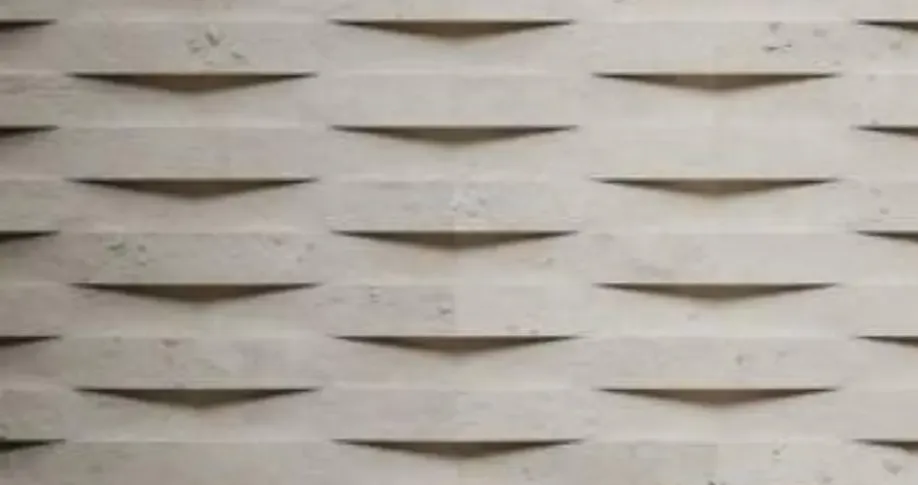
Deep angled fins that throw hard shadows.
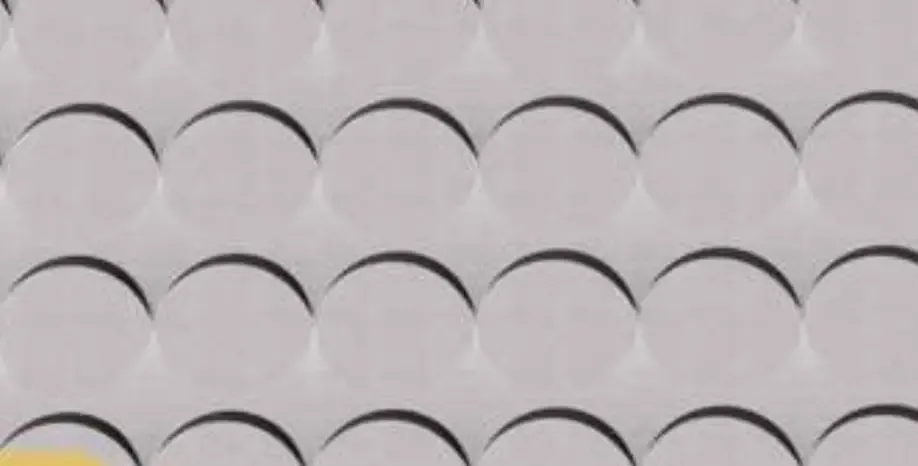
Soft crescent curve, reads as a rippling field.
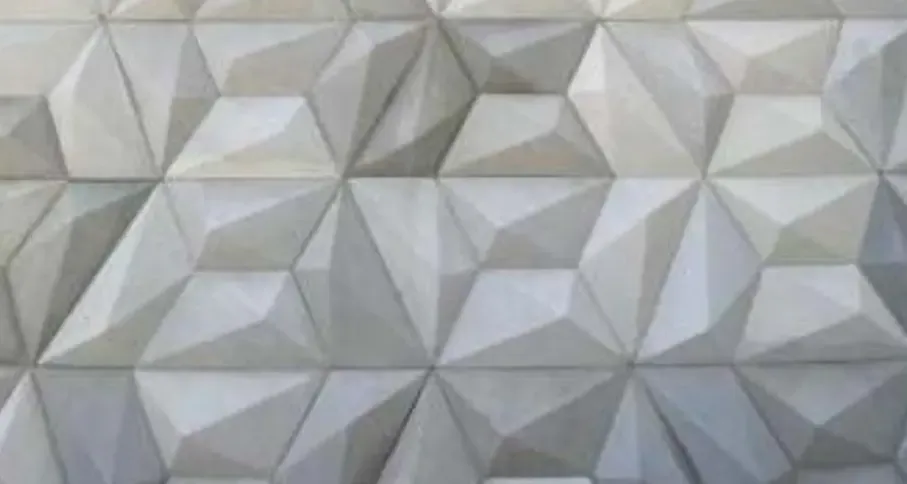
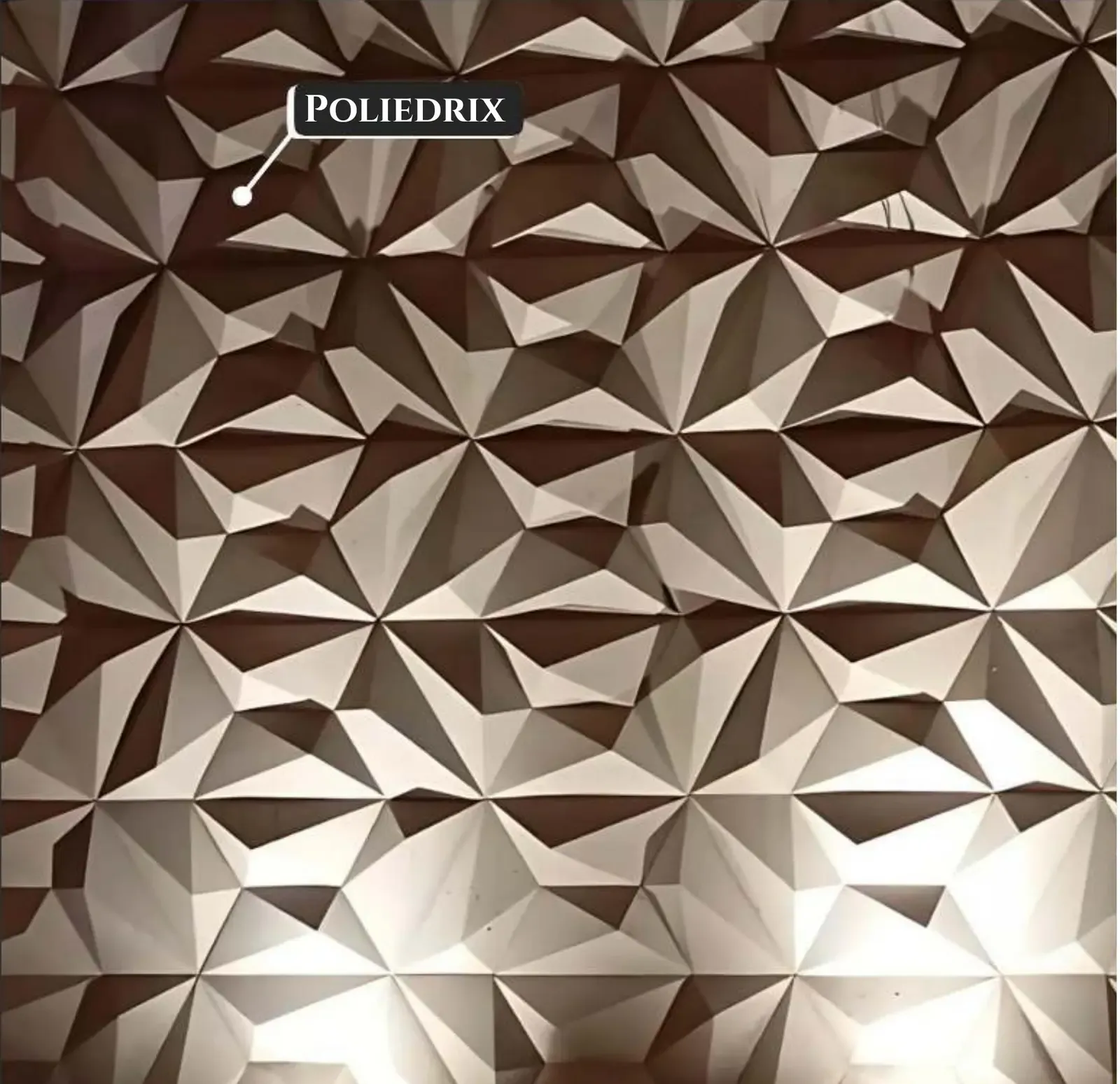
Faceted polyhedron — our most sculptural panel.
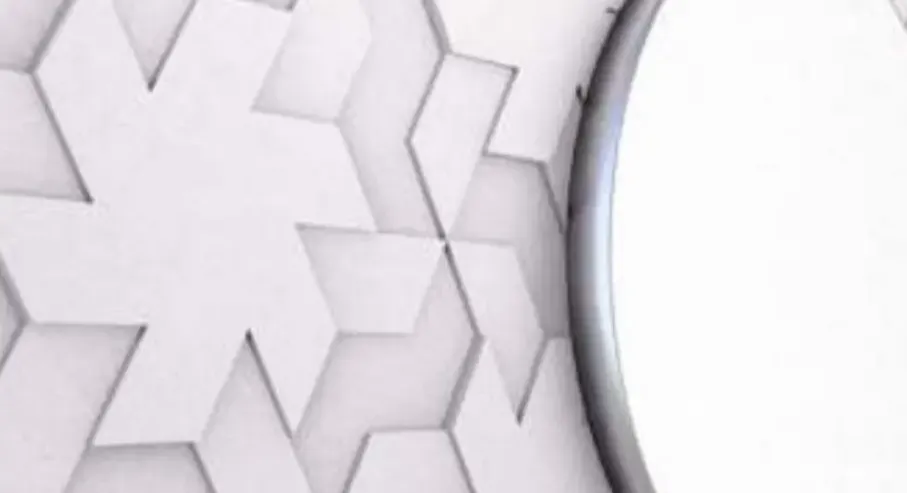
Interlocking triangles in a tight tessellation.
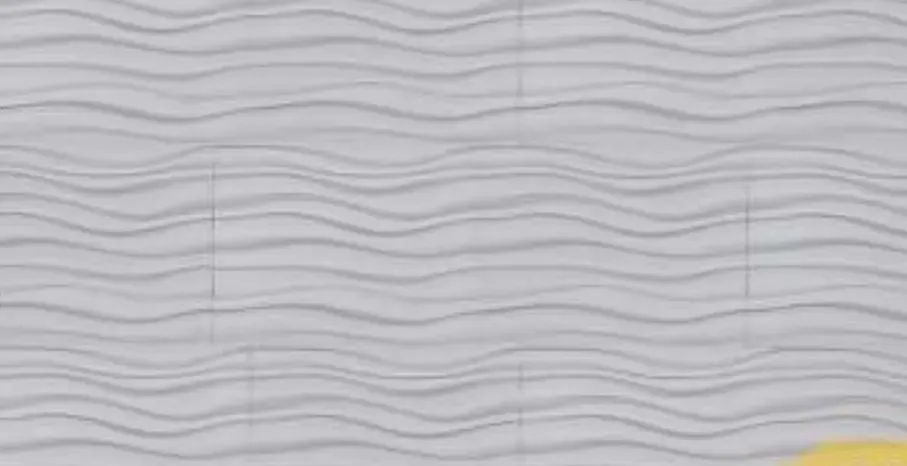
Wind-blown ripple across a wide panel.
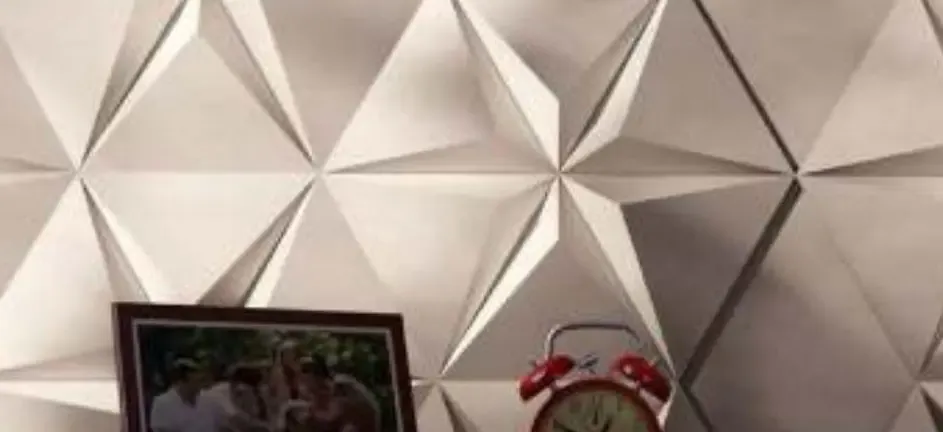
Classic pyramid studs, evenly gridded.
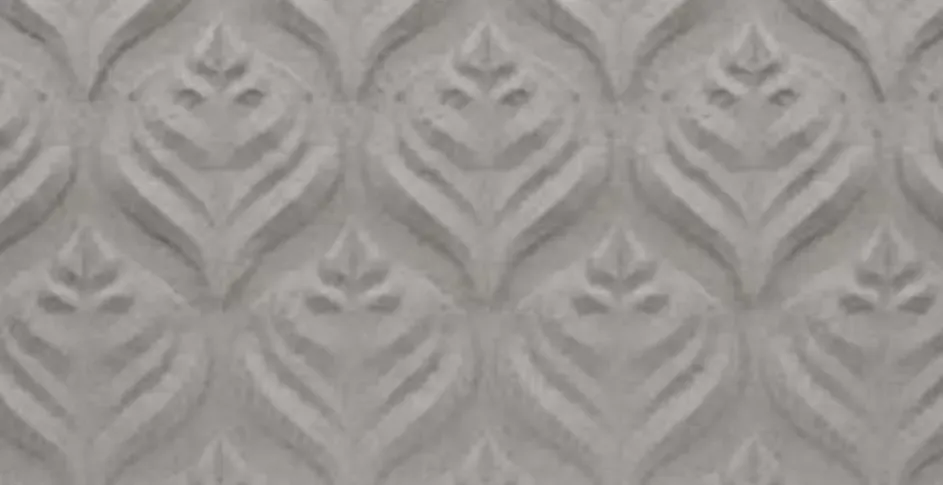
Tall lily-petal relief for feature walls.
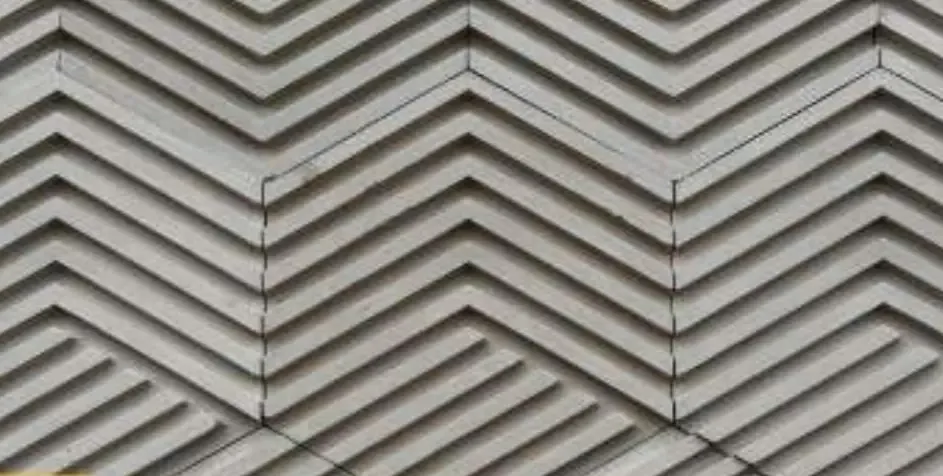
Chevron cube illusion — strongly directional.
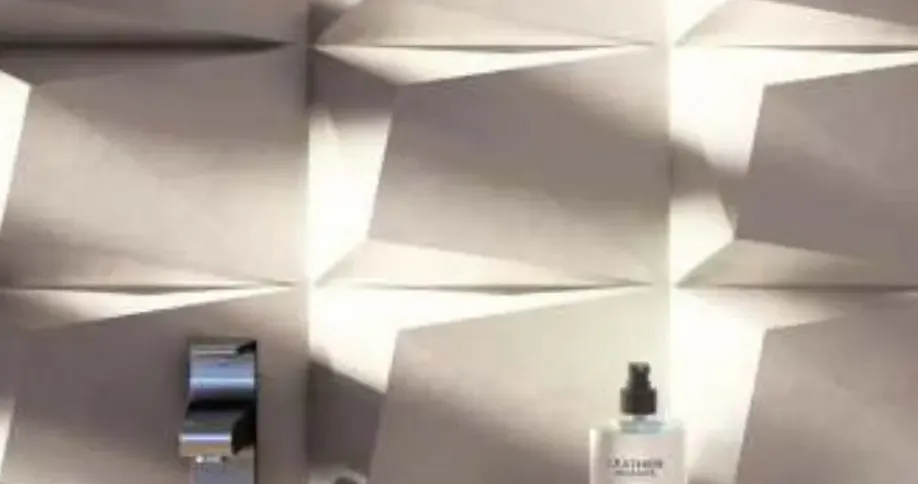
Deepest panel in the range; heavy shadow.
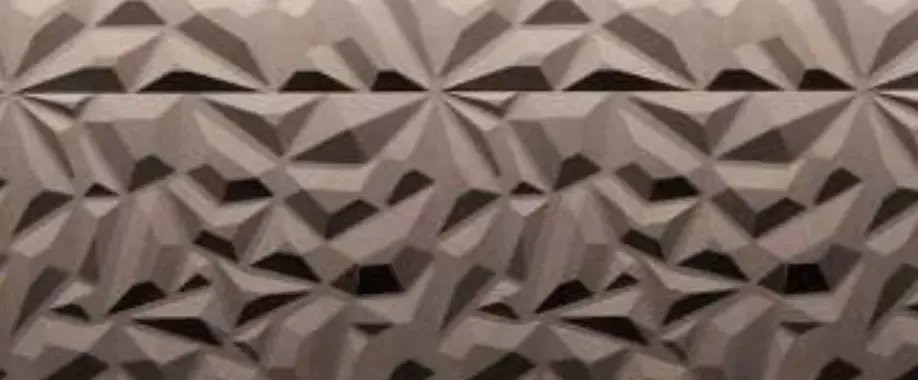
Slimmest panel — fine pebble texture, minimal build-out.
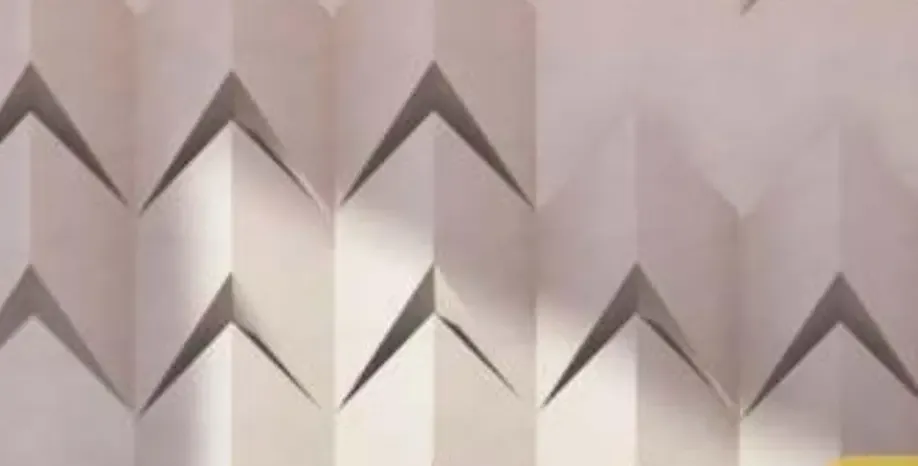
Arrow chevron that stacks into a herringbone.
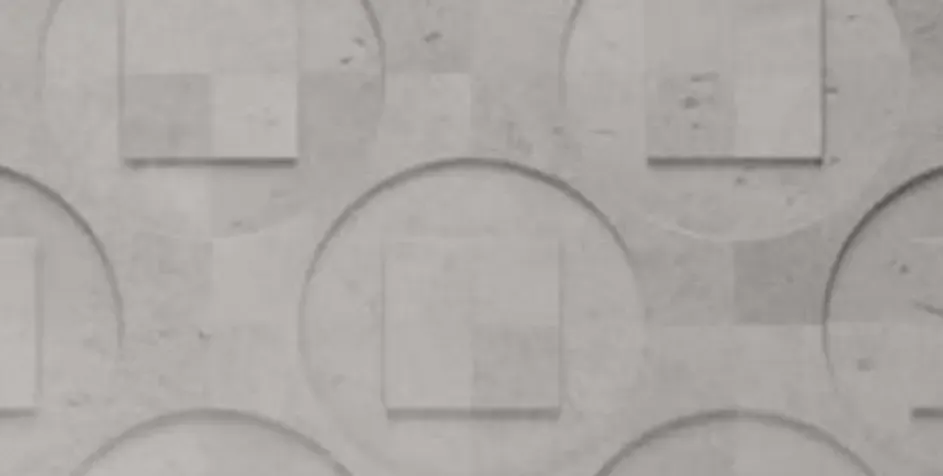
Star-burst relief on a square field.
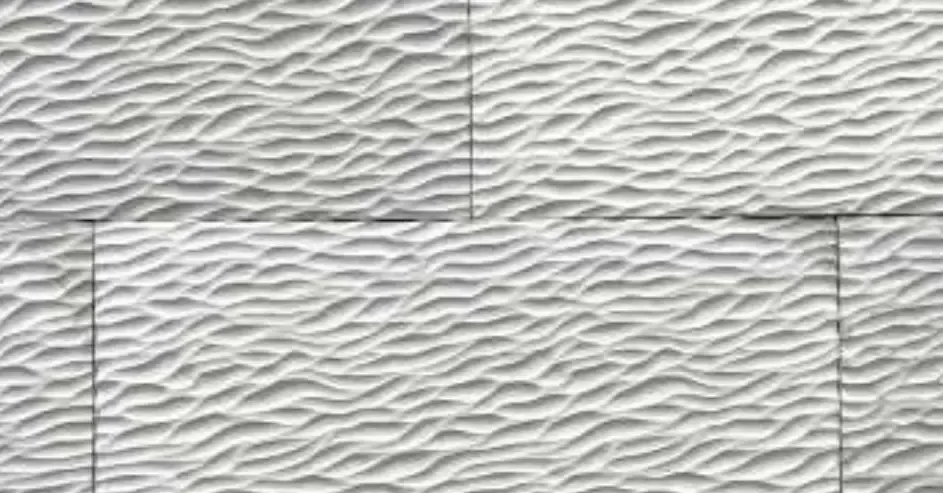
Widest panel — a slow, rolling wave.

Petal bloom that tiles seamlessly in every direction.
| Compressive strength | 200–250 kg/cm² |
|---|---|
| Body | Grey and white cement, standard and premium grades |
| Colour | Stock colourways plus custom colour matching |
| Finish | Through-coloured, sealed on request |
| Suitable substrates | CMU, poured concrete, brick, stucco, and framed walls over lath |
| Fire | Non-combustible concrete body |
| Exposure | Interior and exterior, above and below grade |
| Coastal use | Rated for salt-air exposure with a penetrating sealer |
| Thickness range | 3/8" (Lapillus) to 2⅜" (Quadrata) |
| Tiling | Seamless in all directions |
| Finish | Raw concrete, sealed, or painted |
Full spec sheets and dimensioned drawings are available for submittals — ask and they'll be emailed the same day.
The applications this range is specified for most often in South Florida.
Miami condo owners can't touch the exterior, so the accent wall does the work. Lightweight formats that go over drywall without structural changes.
View details →Restaurant walls take a beating and get photographed constantly. These are the finishes that survive both.
View details →A lobby has about four seconds to say what the property costs. Large-format stone and deep-relief panels are how that gets said.
View details →When the wall is the point. Deep-relief panels, lattice screens, and large-format stone specified for maximum effect.
View details →Our most geometric range. Six square and rectangular formats on a common module, so you can shift scale across a facade without changing material.
View details →Breeze block is back, and Miami is where it belongs. Twenty-four patterns that filter sun, move air, and give a wall a shadow that changes all day.
View details →Not sure whether your wall wants a solid relief panel or an open lattice? This is the side-by-side comparison, with coverage, depth, and cost for both.
View details →Between 3/8 of an inch and 2⅜ inches depending on the pattern. Lapillus is the slimmest at 3/8 — you barely lose any room. Quadrata is the deepest at 2⅜ and throws a genuinely architectural shadow. Check the thickness on each panel before you commit, especially in a corridor.
Yes. Every pattern is designed to continue across the joint, so a finished wall reads as one continuous surface rather than a grid of tiles. That only holds if the installer keeps the coursing tight — a sloppy joint breaks the illusion instantly.
All of them. It's the same concrete body as our stone, so UV, rain, and salt are non-issues with a sealer. Deep-relief panels on an exterior wall are spectacular in raking afternoon light.
You can, and plenty of people do — a single flat colour across a deep-relief panel makes the shadow do all the work. Use a breathable masonry paint, not an elastomeric coating, or you'll trap moisture in the body.
Something shallow — Lapillus, Moon, or Stella. Deep panels like Quadrata and Trapezoid need viewing distance. In a powder room they close the space in and you lose the pattern entirely because you're standing too close to read it.
Send your square footage and we'll come back with a number, a stock position, and a delivery date for Miami.