
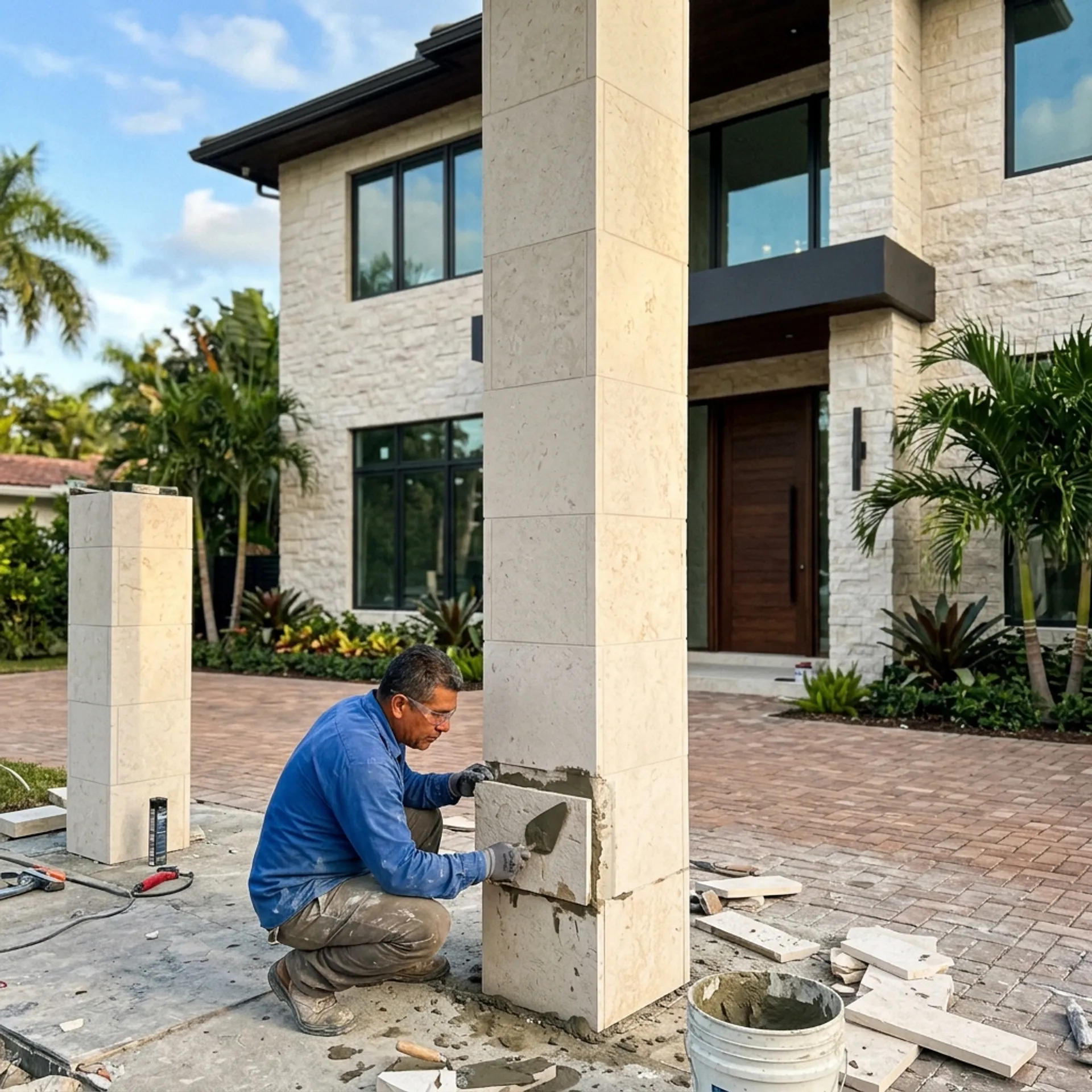
Stone Veneer Repair & Regrouting in Miami, FL
We diagnose the root cause before we patch anything. A repair that doesn't fix the underlying problem isn't a repair — it's a postponement.
Miami Stone Veneer Specialists repairs failed stone veneer installations throughout Miami, FL — loose panels, cracked grout joints, water intrusion behind the stone, efflorescence staining, and delamination from the substrate. We see a lot of repair work in Miami because a significant percentage of the stone veneer installed here was done without proper moisture barrier systems, and Florida's rain and humidity finds every gap.
The most important part of a stone veneer repair is diagnosing what actually caused the failure before touching the stone. The problem you see on the surface — a loose panel, a black stain on the face, a crack running through the mortar joints — is usually a symptom, not the root cause. The root cause is almost always moisture. Either the moisture barrier system was inadequate or missing, the mortar had voids behind the stone that collected water, or a window or penetration flashing was allowing water to enter the wall cavity and migrate down behind the veneer.
If we patch the symptom without fixing the source, the same failure reappears in 2–3 years. We've seen homeowners spend money on three rounds of patchwork before someone finally looked behind the stone to find the actual problem. That's the conversation we have upfront: what's causing this, and what's the real fix?
Matching existing stone for repairs is often the hardest part of the job. Natural stone from a specific quarry lot can't always be matched exactly — the material varies by batch and cut. For repairs on natural stone installations, we source as close a match as possible and adjust joint spacing if needed to make the repair blend. For manufactured stone, matching is easier if the product line is still in production, but discontinued colors and profiles are a problem. We'll tell you upfront if we can get a good match or if the repair will be visible.
Common Stone Veneer Failures in Miami
Delamination from substrate. Stone panels pulling away from the wall entirely, usually due to insufficient mortar coverage (less than 95% contact) or a failed bond between mortar and a painted or sealed substrate. The stone wasn't bonded to the wall — it was resting against it.
Cracked grout joints. Thermal expansion in Miami's heat causes mortar joints to crack when the mortar mix was too rigid. Polymer-modified mortar is flexible enough to handle Florida's temperature swings — standard portland is not. Joint cracking lets water in and the cycle accelerates.
Efflorescence. White mineral deposits on the stone face are the visible sign of water moving through the mortar. Salt crystals from dissolved minerals in the mortar are deposited on the stone surface as the water evaporates. The fix requires stopping the water movement, not just cleaning the surface.
Mold staining. Black or green staining on the stone face in shaded areas is mold growth on the stone surface or in the mortar joints. This is a maintenance issue in Miami's humidity and is addressable with appropriate cleaning agents and a penetrating sealer to reduce future moisture absorption.
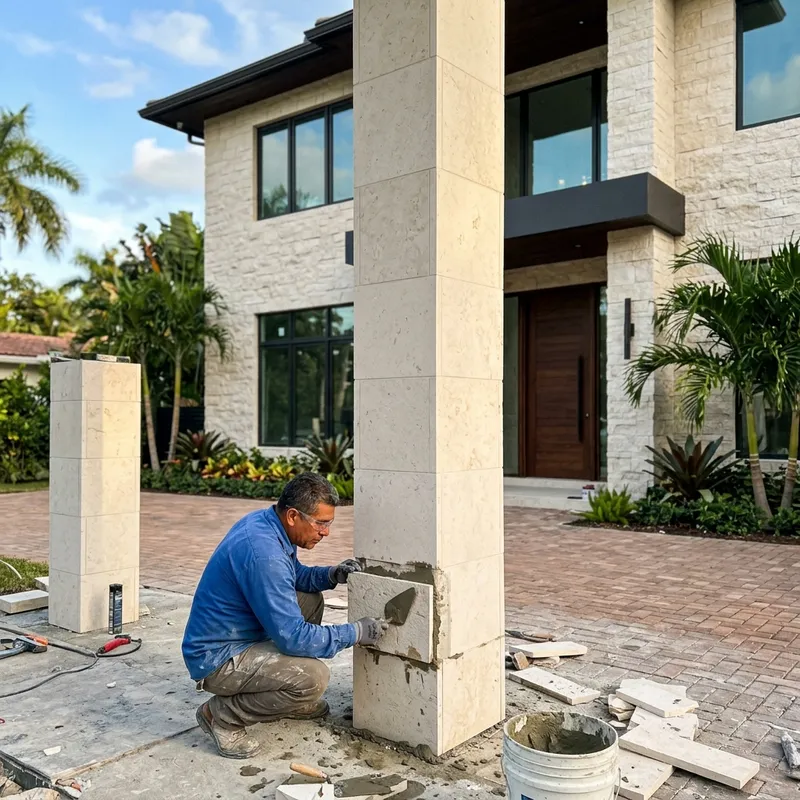
We find the cause, not just the symptom.
Patching over a moisture problem just delays the next failure. We inspect behind the stone before quoting.
Stone Veneer Repair in Miami, FL
Contact Miami Stone Veneer Specialists to schedule a stone inspection. We'll diagnose the failure mode and give you a repair plan and price.